

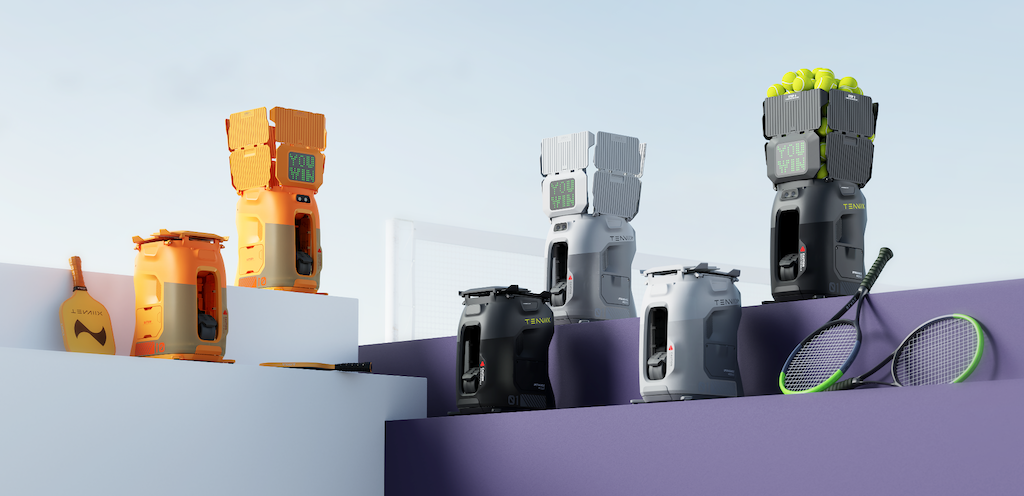
TENNIIX is bringing artificial intelligence onto the practice court with the debut of TENNIIX Pro, which the company bills as the world’s first AI vision-powered tennis robot. The new training system is being showcased Sept. 4-8 at IFA 2026 in Berlin.
Unlike conventional ball machines that rely primarily on pre-programmed feeds, TENNIIX Pro uses a 4K and 1080p dual-camera AI vision system to track both ball trajectory and player position in real time. The technology allows the machine to create more responsive training sessions incorporating movement, recovery and shot preparation. An AI-powered Challenge Mode can also score shots in real time, providing players with immediate feedback during individual practice.
The system includes an integrated LED display that previews upcoming shots and provides on-court feedback, while a wearable armband enables voice control so players can modify sessions without returning to the machine. Through its companion app, users can access more than 1,000 customizable shot combinations, adjusting speed, spin, placement and feeding intervals to create drills for different strokes, footwork patterns and match situations.
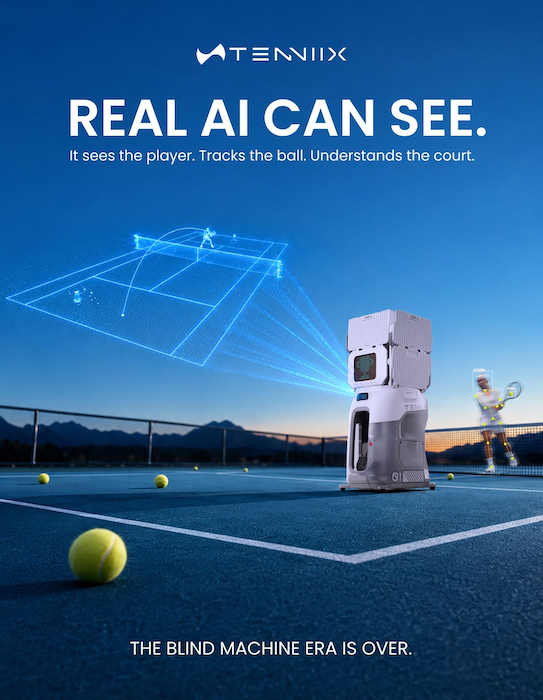
Portability is another focus of the design. Weighing approximately 8.5 kilograms, or 18.7 pounds, TENNIIX Pro is intended to be considerably easier to transport and set up than many traditional ball machines, making the technology suitable for players who practice across multiple facilities.
TENNIIX is also extending the platform beyond tennis. Beginning in September, the company plans a software upgrade for selected products that adds dedicated padel training programs, including drills designed around padel-specific trajectories and glass-rebound situations. The update will allow compatible machines to serve both tennis and padel players without additional hardware.
Developed by Enhanced Robotics, TENNIIX represents another step in the application of AI and computer vision to racquet-sports training. Rather than positioning the system as a replacement for coaches or hitting partners, the company sees the technology as a way to make solo practice more interactive and adaptable when traditional training resources aren’t available.