

Lacoste returned to the center court at Roland-Garros for its Spring-Summer 2027 runway show, using one of tennis’s most recognizable stages to push the brand’s sporting heritage further into contemporary fashion.
Presented on Philippe Chatrier court under the theme “Dress Code: No White Required,” Creative Director Pelagia Kolotouros built the collection around tennis’s evolving relationship with style and individuality. The clay court itself became part of the presentation, with an infinity-shaped runway cutting through the terre battue and the surface’s sunbaked clay and mineral tones informing the collection’s palette.
The concept draws on two figures who helped break tennis fashion conventions in the 1920s: Suzanne Lenglen, whose less restrictive clothing challenged the sport’s established dress codes, and company founder René Lacoste, whose pursuit of greater freedom of movement ultimately helped produce the polo shirt that became synonymous with the brand. For Spring-Summer 2027, Lacoste revisited that tension between tradition and freedom through relaxed tailoring, oversized piqué polos, technical jerseys, pleated skirts and performance fabrics.
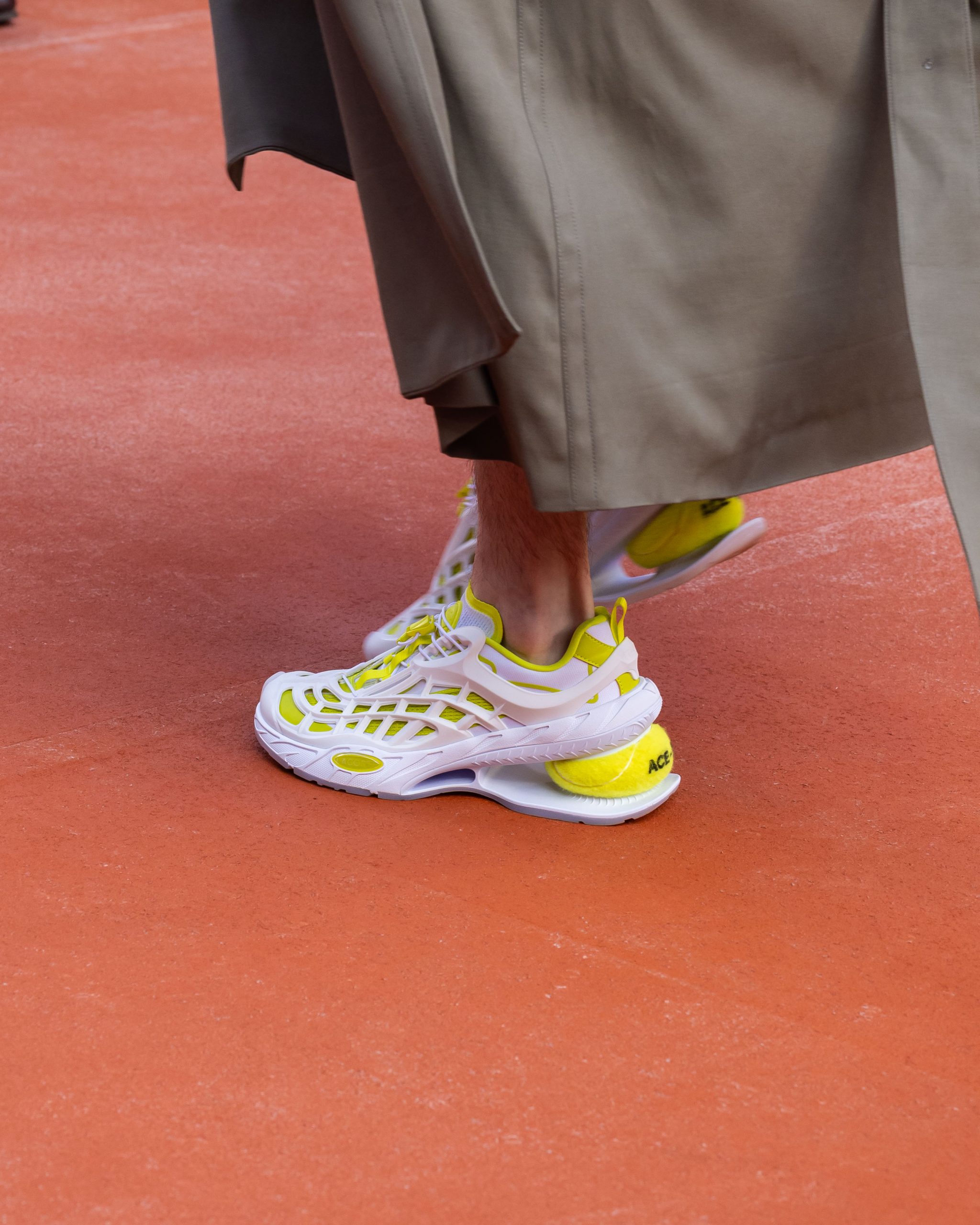
Footwear provided one of the collection’s clearest connections between tennis equipment and high fashion. The sculptural ACE-T1 sneaker fused a tennis ball wedge with a lace-up pump, while its caged construction drew inspiration from the tension and geometry of a tennis net. Lacoste presented the ACE-T1 concept in three expressions—a sneaker, tennis-ball wedge and lace-up pump—turning one of the sport’s most familiar pieces of equipment into a fashion element.
The collection also featured cobalt nylon tracksuits, orange warm-up-inspired pieces, technical layers and white garments deliberately marked with clay, alongside a draped bag influenced by Irving Penn’s 1984 photograph of the Lacoste polo.
From a brand perspective, the show illustrates how Lacoste continues to treat tennis as more than sponsorship or historical provenance. Roland-Garros, court surfaces, nets, tennis balls and traditional tennis whites become design assets that can connect the company’s performance-sports identity with its global fashion business. With “No White Required,” Lacoste isn’t distancing itself from its tennis roots—it is finding new ways to commercialize and reinterpret them for consumers well beyond the baseline.