

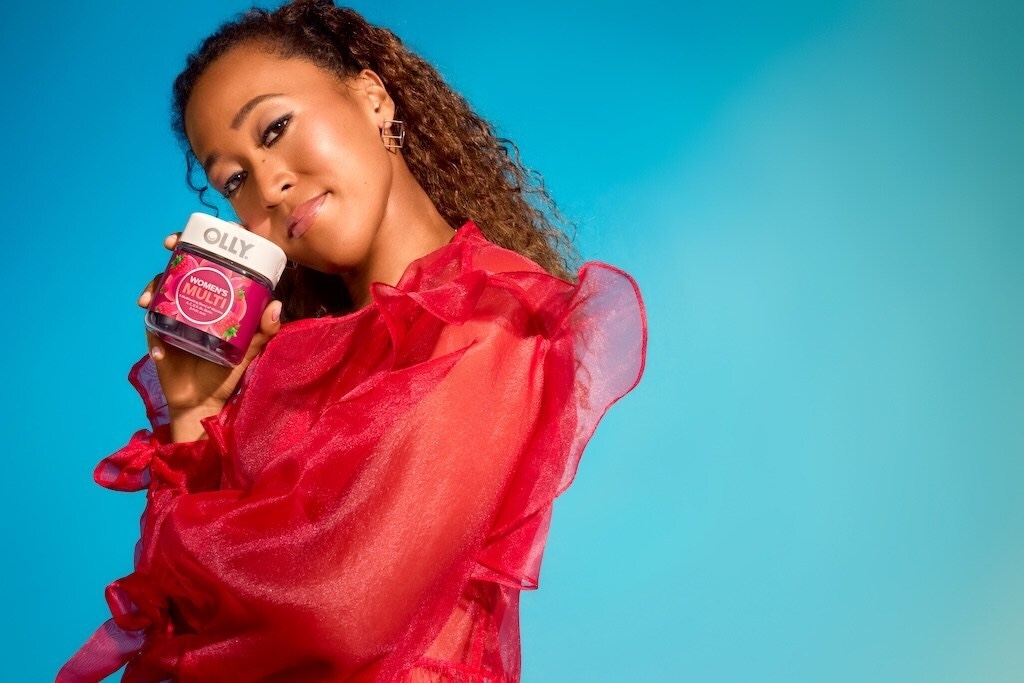
As Mental Health Awareness Month continues to evolve into a major platform for brand-led social impact, OLLY has partnered with Naomi Osaka to launch “Do What Serves You,” a campaign positioned at the intersection of consumer wellness, cultural relevance, and purpose-driven marketing.
The initiative marks the beginning of a year-long collaboration between the supplement brand and the four-time Grand Slam champion, whose personal advocacy around mental health has helped reshape public discourse in sports and beyond. Timed to the start of May, the campaign encourages women to prioritize their mental and physical wellbeing—framing self-care not as indulgence, but as a prerequisite for performance and resilience.
At its core, the campaign addresses a persistent imbalance: according to a Hologic-Gallup survey cited in the announcement, 63% of women struggle to prioritize their own health, often placing others’ needs first. OLLY and Osaka are leveraging that insight to anchor a broader message—“caring for others begins with caring for yourself”—while attempting to normalize conversations around stress, burnout, and boundaries.
From a marketing standpoint, “Do What Serves You” reflects a fully integrated, omnichannel strategy. The rollout includes a high-visibility out-of-home presence in New York’s Times Square, alongside social media activations, influencer partnerships, OTT placements, and digital video campaigns. The scale and media mix underscore how wellness brands are increasingly investing in brand storytelling as a primary growth lever—particularly when tied to culturally resonant issues.
Beyond messaging, OLLY is reinforcing the campaign with financial commitments aimed at tangible impact. The company announced $1.5 million in grant funding over the next three years to support mental health organizations, with initial funding directed to partners such as SeekHer Foundation, Girl Up, the National Menopause Foundation, and Postpartum Support International. This dual approach—pairing narrative with measurable investment—reflects a broader shift toward accountability in purpose-driven campaigns.
For Osaka, the partnership extends her role from athlete to cultural advocate and collaborator. Her involvement is positioned as more than a traditional endorsement, drawing directly from her personal experiences balancing elite competition, motherhood, and mental health. That authenticity is central to the campaign’s positioning, particularly in a market where consumers increasingly scrutinize brand–celebrity alignments.
Strategically, the collaboration illustrates a growing convergence across three sectors: sports, wellness, and mental health advocacy. Brands are no longer simply selling products—they are embedding themselves within broader lifestyle narratives, using athlete partnerships to drive both credibility and emotional engagement.
For the racquet sports industry and adjacent wellness ecosystem, the campaign signals a continued expansion of athlete influence beyond performance into health, identity, and social impact. As players like Osaka leverage their platforms to shape cultural conversations, brands that align with those values—and back them with investment—are positioning themselves to capture both consumer trust and long-term relevance.
In that context, “Do What Serves You” is less a seasonal campaign and more a blueprint for how modern wellness brands can integrate purpose, storytelling, and commercial strategy into a single, scalable platform.